

By Mukarram Hamid
The UK Government has announced a reset of the HS2 rail project, introducing revised costs, updated timelines, and new management measures after a period of mismanagement.
The revised timeline puts phase one completion between 2036 and 2039, with the full route expected by 2043.
The project’s estimated cost has increased from £87.7bn to £102.7bn, due to an underestimated scope, delivery inefficiencies, and inflation.
Heidi Alexander, Transport Secretary, said: “Taxpayers, passengers, and communities along the route have been let down by years of mismanagement on HS2.”
She stated that the government has worked with the new HS2 leadership to stabilise the project and improve its management.
She also added that efforts would be made to save time and money during the remainder of the project.
To reduce costs and accelerate delivery, HS2 trains will operate at 320kmh (200 mph), aligning with international high-speed rail standards.
Earlier plans for 360 kmh (225 mph) trains were scrapped due to the absence of suitable testing infrastructure in Great Britain.
This update is expected to save up to £2.5bn and at least one year in construction time.
Phase one of HS2, from Old Oak Common in London to Birmingham, is now set for 2036–2039.
The full HS2 route, with a West Coast Main Line connection, is due by 2040–2043.
HS2 is expected to increase rail capacity between London and Birmingham, reduce journey times by 30 minutes, double peak long-distance capacity on the West Coast Main Line, and generate an estimated £20bn for the economy over the next decade.
It will also support 63,000 new homes and 9,000 jobs in the West Midlands and West London.
Additionally, commercial development at Euston station is projected to add £41bn to the economy over the next 30 years and create 34,000 jobs.
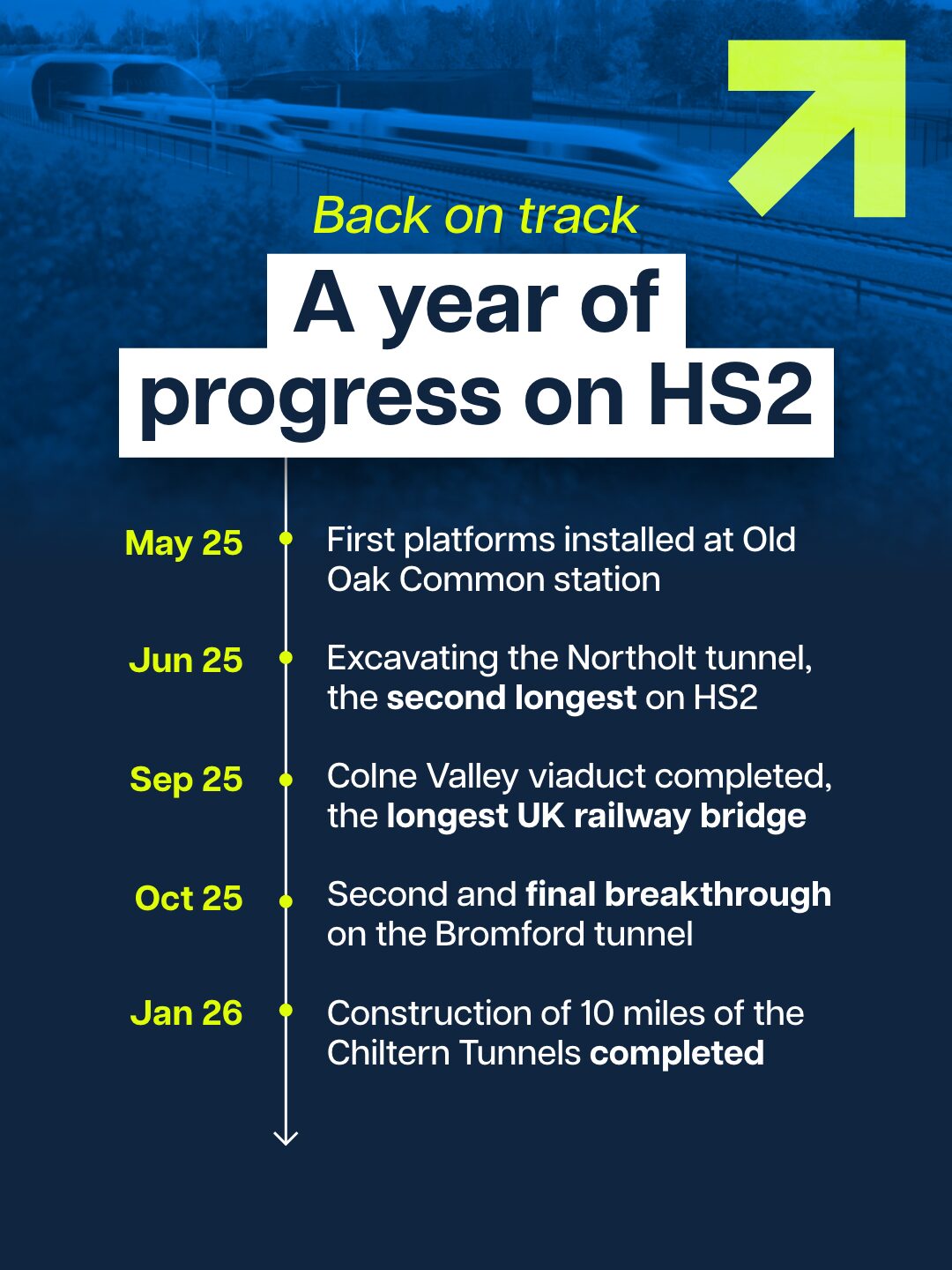
Mark Wild, CEO of HS2 Ltd, has reported improved efficiency through early completion of six major construction milestones, a reduction of 300 administrative roles, and a review of contracts for financial oversight.
By Mukarram Hamid
Wild stated that resetting HS2 was necessary to regain control of the project.
He said: “We have turned a corner in the last 12 months with notably better productivity, delivering major milestones ahead of schedule.
“Better journeys, more capacity, and economic growth are all vital to the country’s future prosperity – and that’s exactly what we will deliver.”
A government assessment also suggests that cancelling the project would cost as much as, if not more than, completing it, with no benefits.
According to the government, HS2 funding from 2029 onwards will be reviewed within the established government spending review process, which comprises periodic, formal assessments of departmental budgets based on the current financial plan, public finance stability goals, and economic growth priorities.
The government states that funding decisions for HS2 will be determined during these spending reviews, requiring evaluation and prioritisation alongside other government expenditures, in line with its fiscal rules.
More information about the HS2 plans is available at https://www.hs2.org.uk.

